
What Are Light Nights in Fantasy Basketball?
Light nights in fantasy basketball are nights where fewer NBA games are played, which means your fantasy lineup is more likely to have open starting spots.
That matters because streaming only works if the player you add can actually get into your lineup.
Why light nights matter in fantasy basketball
On heavy NBA slates, your roster might already be full. If you add a player, you might not even be able to start them.
On light nights:
- you have more empty lineup slots
- streamers are easier to fit into your roster
- your adds turn into real stats/points
Streaming basics: What Is Streaming in Fantasy Sports?
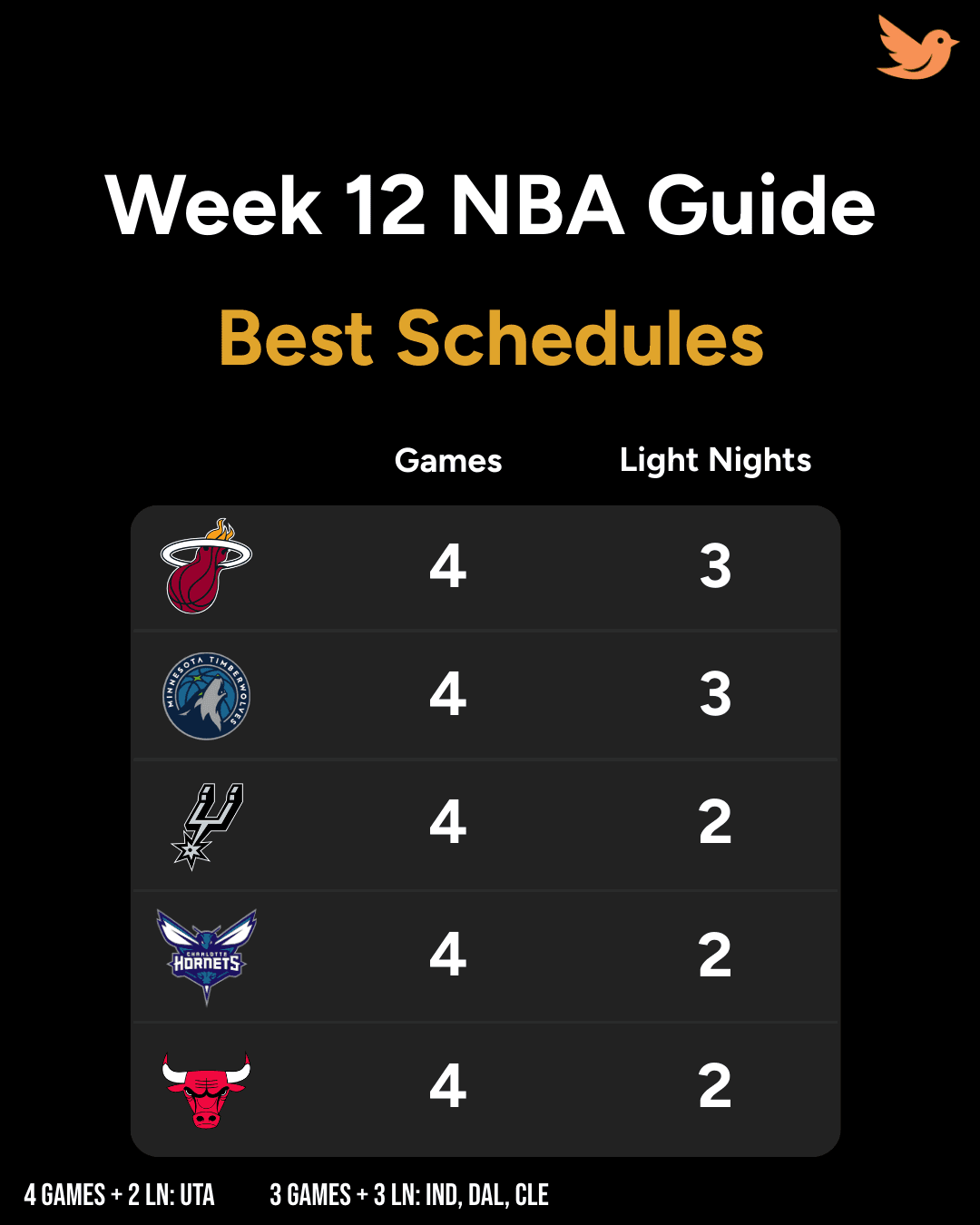
How to use light nights to win matchups
- Target teams with off-night games. When planning your week, prioritize teams that play on lighter slates.
- Stream for usable games, not just total games. A 4-game week is not always better if 3 games land on heavy nights you cannot use.
- Chain your adds around the schedule. Full method here: How do I stream effectively in fantasy sports?.
How to Find Light Nights (Quick Methods)
You do not need to be an expert to spot light nights. Use one of these:
- Check the NBA slate size: nights with fewer games are usually where you will have open lineup spots.
- Look at your own lineup first: if your starters already fill every slot, that night plays like a heavy night for you, even if the league schedule is not huge.
- Target teams that avoid the busiest days: some weeks, the best streamers are from teams that play when most teams are off.
Quick tip: your goal is to create more startable games, not just add more names to your roster.
Check out our weekly guides for the best schedule of the upcoming week. Fantasy Tips.
Usable games vs total games: the most important concept
Most fantasy managers lose streaming value because they optimize for total games instead of usable games. Total games are how many times a player appears on the NBA schedule. Usable games are how many of those games actually fit into your active lineup.
Example: Player A has 4 games, but three are on overloaded nights where your lineup is already full. Player B has 3 games, and all three are on lighter nights where you have open guard or utility slots. Player B usually gives you more real production, even with fewer total games.
This is why light-night planning is so powerful in head-to-head formats. If your opponent is collecting "paper value" and you are collecting real starts, you win the volume battle without needing better players.
If you use weekly matchup strategy, think in this order: first identify where your lineup has empty spots, then choose streamers whose schedule lands in those spots, then break ties using role, minutes, and category fit.
Weekly planning example (4-add league)
Here is a simple way to turn light nights into a repeatable weekly routine:
- On Sunday night, map your current starters by day and circle the nights where you have open slots.
- Use Add #1 early in the week on a player who gives you two starts across those lighter days.
- Use Add #2 midweek to pivot into another two-game window with light-night coverage.
- Save Add #3 or #4 for late-week category swings (threes, steals, blocks) based on matchup score.
The goal is to chain starts, not chase names. If your adds create 6 to 8 usable games from a single stream spot, you are running an efficient process.
Common mistakes with light-night streaming
- Adding players before checking your actual lineup congestion by position.
- Burning all weekly adds too early and losing flexibility for injuries or rest news.
- Dropping stable long-term value for one short schedule bump.
- Ignoring category fit in close matchups and streaming empty points.
Light nights are not a gimmick, they are a lineup-efficiency tool. Used well, they turn waiver moves into starts, and starts into matchup wins.
Category strategy on light nights
Light nights are also where category leagues are decided. If your matchup is close in steals, blocks, threes, or assists, one extra active player can swing the week. That is why the best streamers are not always the highest-scoring names, they are the players with category profiles that match your exact need.
If you are behind in threes, target high-volume perimeter players with secure minutes. If you need steals, prioritize guards with stable defensive activity instead of low-minute boom options. If blocks are close, focus on frontcourt streamers who consistently contest shots, even if their point totals are modest.
A useful rule is to avoid chasing three categories at once. Pick one or two categories that are truly winnable and stream directly toward them. This creates cleaner decisions and prevents wasted adds on players who do not solve your matchup.
End-of-week decision framework
By Friday, most matchups show a clear shape. At that point, stop thinking in general terms and move to scenario planning:
- If you are comfortably ahead in a category, do not spend a move there.
- If two categories are tight, choose streamers who contribute to both.
- If you are behind by too much in one category, redirect to categories you can still flip.
Light-night streaming works best when you protect optionality. Try to keep one move available for Saturday or Sunday so you can react to injury news and late lineup updates. Over a full season, this disciplined approach consistently produces more wins than aggressive early-week overcommitting.
Weekly light-night template you can copy
If you want a repeatable process, use a simple template each week. On Sunday, list your current starters by day and mark where you have open G/F/UTIL spots. Then identify one early-week and one late-week light-night window. Your first move should cover the early window, and your second move should bridge into the late window.
During the week, treat role news as a tie-breaker, not the whole strategy. If two players are close, prefer the one with clearer minutes and cleaner path to starts on your open days. If your matchup is close in one or two categories, prioritize players who directly address those categories instead of broad, low-impact stat lines.
On Friday, review category scoreboard and projected starts. If you are already safe in one category, stop spending resources there. Shift your final move toward the categories that can still flip. This is usually where close matchups are won: not from a huge blockbuster add, but from one efficient move on a night where your opponent has no lineup room.
Over time, this template improves lineup efficiency and reduces wasted adds. The more often your streamers are actually startable, the less you depend on luck and the more your process drives results.
Final takeaway
Light nights are one of the cleanest strategic edges in fantasy basketball because they directly affect whether your waiver moves become real starts. If you plan around lineup room, category needs, and late-week flexibility, you will consistently out-convert opponents who only chase popular names.
Keep the process simple: target usable games, prioritize role stability, and leave one move for the weekend. Over a full season, that discipline adds meaningful production and wins close matchups.
More FAQs
- What is a fantasy pick up automator?
- How do I auto add players in yahoo fantasy?
- When is the best time to add players on yahoo fantasy?
- What are the best fantasy basketball tools?
- Fantasy Waiver Wire Tool (Free)
- What is the best streaming strategy for fantasy hockey?
- What are light nights in fantasy hockey?
- What is streaming in fantasy sports?
- How do I stream effectively in fantasy sports?