
What Are Light Nights in Fantasy Hockey?
Light nights in fantasy hockey are nights where fewer NHL games are played, which makes it easier to fit streamers into your lineup.
In fantasy hockey, streaming is often decided by schedule timing, because you only get value from a pickup if the player actually starts.
Streaming basics: What Is Streaming in Fantasy Sports?
Why light nights matter in fantasy hockey
On busy NHL nights, your lineup is often full. If your streamer cannot start, you wasted the move.
On light nights:
- you have open lineup slots
- streamers actually get starts
- your adds translate into real category production
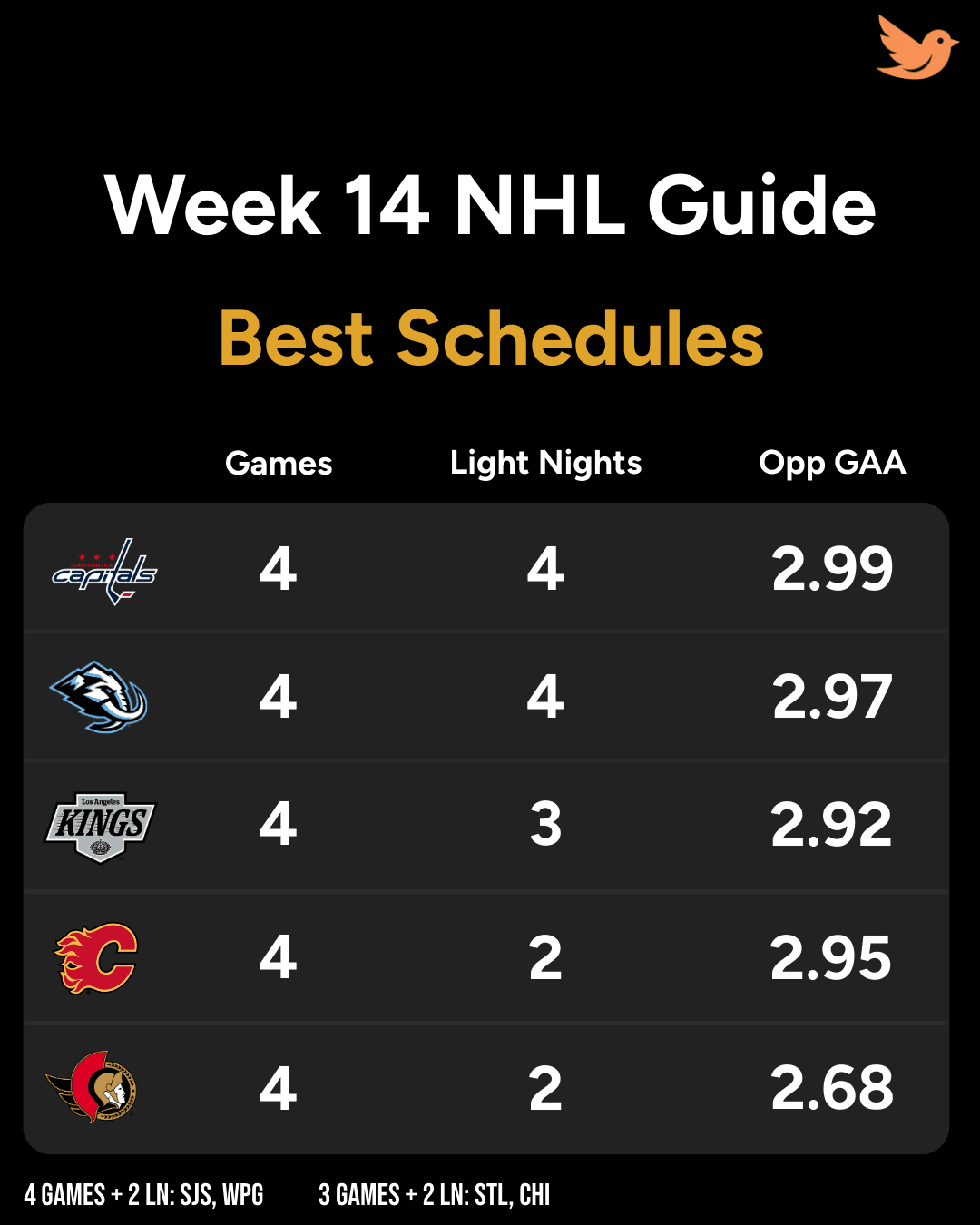
Quick way to use light nights
- target teams with light-night coverage
- prioritize back-to-backs
- stream for category needs (SOG, hits, blocks, PPP)
Full framework: How do I stream effectively in fantasy sports?
How to Find Light Nights (Quick Methods)
Light nights are easiest to use when you identify them early in the week:
- Scan the NHL slate: fewer games usually means more open lineup spots.
- Check position congestion: in hockey, you can get blocked at specific positions (like LW/RW/D). Light nights help because you are less likely to be full.
- Look for back-to-backs on lighter slates: one pickup can turn into two starts, and the second night is often more usable.
Quick tip: light-night streaming works best when you plan 2-3 days ahead instead of reacting last minute.
Check out our weekly guides for the best schedule of the upcoming week. Fantasy Tips.
Why position congestion matters even more in hockey
Hockey lineups can bottleneck faster than basketball lineups because you need specific slots (LW, RW, C, D, UTIL) and many NHL schedules stack on the same nights. You might add a useful winger, but if your wing slots are already full, the move produces zero.
Light nights reduce that bottleneck. When fewer teams play, your lineup opens up and streamers are easier to activate.
The practical takeaway: do not evaluate a streamer by points only. Evaluate whether they can realistically start in your roster structure on the days you need.
What to target on light nights
Once you identify lighter slates, target players with role signals that translate quickly:
- top-6 forwards with elevated even-strength minutes
- defensemen on PP1/PP2 for PPP upside
- volume shooters for SOG floor
- physical contributors for hits and blocks stability
- players in back-to-back sets that fit your open days
In category leagues, this is where light-night strategy becomes a weapon. A single well-timed add can swing two close categories.
Example weekly plan for fantasy hockey
- Sunday: map your open slots by position and identify two light-night windows.
- Early week: add a streamer with two startable games and strong role usage.
- Midweek: swap to a player with a Thu/Sat or Fri/Sun path.
- Late week: use your final move to chase the closest categories.
This structure helps 3-4 waiver moves create 6+ usable starts, which is usually enough to influence head-to-head outcomes.
Common mistakes with light-night streaming in NHL
- Adding by name value and ignoring position fit.
- Streaming only goals/points and neglecting peripheral cats.
- Using all adds early without a weekend contingency move.
- Dropping long-term roster value for one marginal game.
Light nights are one of the clearest repeatable edges in fantasy hockey. If you plan around them weekly, your waiver activity becomes more efficient and your matchup floor rises.
Light-night strategy in playoffs and must-win weeks
In playoff matchups, light-night starts become even more valuable because your margin for error is smaller. A missed lineup spot in March hurts more than a missed spot in November.
In must-win weeks, prioritize guaranteed starts over speculative upside. A middle-six forward with two usable games is often a better play than a bigger name who conflicts with your full lineup nights.
Keep your final add for the weekend whenever possible. Late-week injury news, goalie confirmations, and category swings can change the best move quickly. A disciplined light-night plan gives you both early value and late flexibility.
Category-specific targeting on light nights
In fantasy hockey categories, light nights are where specialization works best. Instead of trying to find one player who does everything, stream for the category battle you can realistically win in your matchup.
- Need SOG: prioritize volume shooters with stable top-9 usage.
- Need hits/blocks: target physical forwards and high-event defensemen.
- Need PPP: stream players seeing PP1/PP2 time, even if overall points are modest.
- Need assists: prioritize puck-moving skaters with offensive zone deployment.
If two options are close, take the player with more secure minutes and a clearer role. Stable opportunity usually outperforms random upside in short matchup windows.
Building consistency week to week
The biggest advantage of light-night strategy is consistency. You are not hoping for perfect prediction, you are creating a repeatable process that turns waiver moves into active lineup games.
Over a long season, this process compounds. Even one extra usable start per week can add meaningful totals in shots, hits, blocks, and points. Those edges are often the difference between playoff qualification and missing by a narrow margin.
Light nights and bench management
Light-night planning is also a bench management skill. If your bench is full of players with overlapping schedules, you will keep creating lineup collisions on busy nights. Replace low-impact, low-startability bench spots with stream-capable flexibility.
A practical rule: keep your core producers, then treat the final spot as a schedule tool. This lets you adapt quickly to role changes and squeeze more active starts from the same number of waiver moves. Over time, this approach raises both your weekly floor and your playoff consistency.
Practical nightly checklist for NHL light nights
To get consistent value, use a short nightly checklist. First, confirm where you actually have open slots by position. Second, check whether your potential streamer has secure role indicators: top-9 deployment, power-play usage, and stable time on ice. Third, match that profile to your closest categories for the week.
If two players are tied, choose the one with stronger path to immediate starts across the next two days. Back-to-back coverage on light nights is often worth more than one isolated game on a busy slate. This is especially true in leagues where every extra SOG, hit, or block can decide the matchup.
Keep your final move flexible for weekend swings. Friday and Saturday lineup news can create the best late value of the week. Managers who keep one move available can react to those windows while opponents are locked.
The overall objective is repeatability. You are not trying to be perfect every night. You are building a process that consistently turns waiver activity into active lineup production.
Final takeaway
In fantasy hockey, light nights turn schedule awareness into matchup points. If your streamers can start when your opponent is lineup-blocked, you gain real edge without needing better draft capital.
Keep it simple: identify open slots, target role-secure players, and save one move for late-week adjustments. That process is reliable, scalable, and effective over a full season.
If you stick to this structure weekly, light-night planning becomes automatic. You will waste fewer moves, create more active starts, and gain more category pressure in close matchups, which is where most fantasy hockey weeks are decided.
Keep reviewing your weekly results and adjust your streamer targets by category need. Small refinements each week are what turn this into a season-long edge.
More FAQs
- What is a fantasy pick up automator?
- How do I auto add players in yahoo fantasy?
- When is the best time to add players on yahoo fantasy?
- What are light nights in fantasy basketball?
- What are the best fantasy basketball tools?
- Fantasy Waiver Wire Tool (Free)
- What is the best streaming strategy for fantasy hockey?
- What is streaming in fantasy sports?
- How do I stream effectively in fantasy sports?