
What Is Streaming in Fantasy Sports?Beginner Guide + Examples
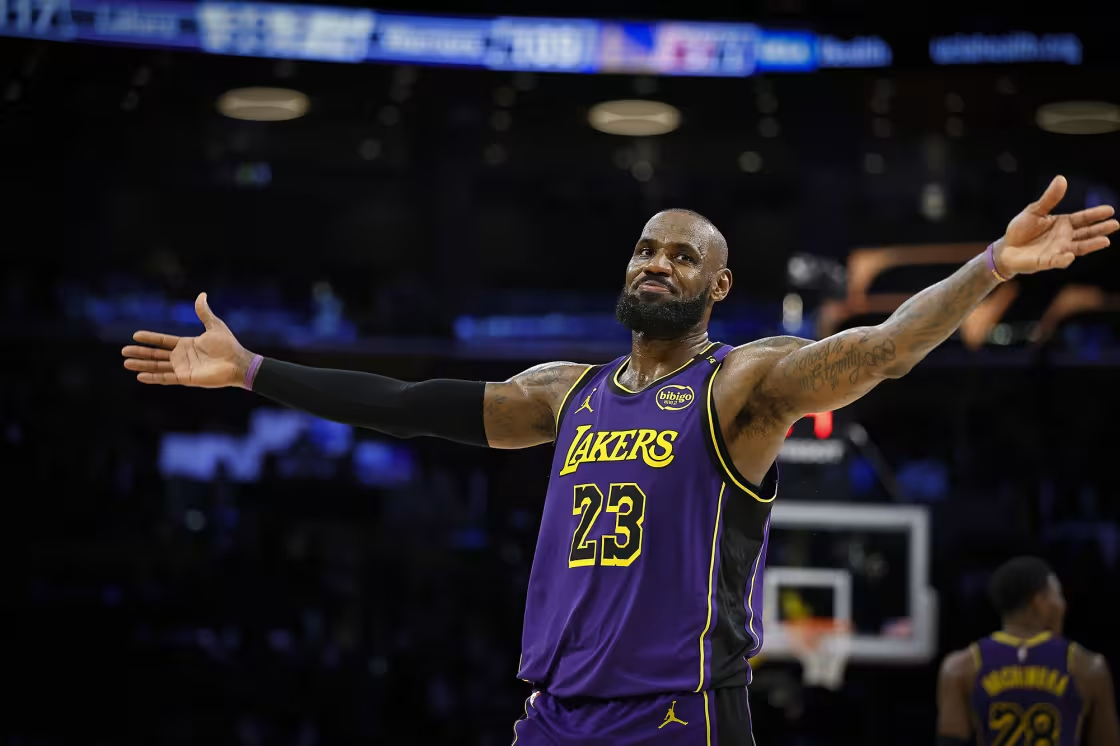
LeBron James celebrates during a Lakers game. Photo: Wally Skalij / Los Angeles Times.
Fantasy Streaming
Streaming in fantasy sports means adding and dropping players frequently to maximize games played, matchups, or specific stats, usually using the waiver wire. Instead of holding the same bench players all season, you stream short-term players for a few days (or even one night) to gain an edge. If you want to automate streamer pickups ahead of time, try our free pickup automation tool, EarlyBird Fantasy.
Streaming is most common in fantasy basketball and fantasy hockey, where players have multiple games per week and schedules vary a lot.
Why Streaming Works
Fantasy leagues usually limit how many players you can start each day, how many adds and drops you can make per week, and sometimes how many games count for each position. Because of those limits, the goal is to use your moves in the smartest way possible. Streaming works because it helps you get more games played than your opponent, target specific categories like shots, hits, blocks, threes, and steals, take advantage of light nights when your lineup is not full, and cover injuries quickly without wasting a long-term roster spot.
Streaming vs. Holding: What is the Difference?
Holding means you keep a player long-term because you believe their season value is strong. Streaming means you pick up a player for short-term value because:
- they have a great schedule (more games, off-night games)
- they have a good matchup
- they are hot or moved into a better role (line 1, power play 1, etc.)
- your team needs specific stats this week
Hold for talent. Stream for schedule and role.
What Are Streamers?
A streamer is the short-term pickup you add specifically for streaming.
A good streamer usually checks at least one of these boxes:
- plays on light nights
- has a back-to-back
- has 4 games in the week (or 3 games with good off-night coverage)
- is getting more ice time/minutes lately
- contributes in categories that are hard to find on waivers
Utilizing Light Nights (The Secret to Streaming)
Streaming is easiest when your lineup is not full.
In basketball and hockey, some nights have a ton of games (your roster is packed), and some nights have fewer games.
- Heavy night: your starters are already playing - adding a player does not help much because you cannot start them.
- Off-night/light night: fewer games - you have empty lineup spots, so a streamer can actually get into your lineup.
That is why fantasy managers talk about off-night streamers: players who play on nights where you have room to start them.
Streaming in Points Leagues vs Category Leagues
Streaming in Points Leagues
- maximizing games played
- finding players with strong minutes/role
- targeting schedules (4-game weeks, back-to-backs)
Your goal is usually more total points.
Streaming in Category Leagues
- If you are down in hits, stream hitters.
- If you need blocks, stream shot blockers.
- If you need PPP, stream players on PP1/PP2.
- If you need SOG, target volume shooters.
Your goal is to win enough categories, not necessarily total stats.
How many stream spots should you use?
Most teams should keep at least one dedicated stream spot on the roster. In competitive leagues, some managers run two stream spots depending on waiver limits and depth. The right number depends on your format:
- Shallow leagues: more waiver options, so streaming is usually stronger.
- Deep leagues: fewer quality free agents, so be more selective.
- Tight add limits: prioritize schedule chains and light nights.
- High add limits: combine volume with category targeting.
If you keep too many low-impact bench players, you lose flexibility. If you stream too aggressively, you can drop long-term value. The sweet spot is usually one protected core plus one rotating spot.
Weekly streaming checklist
Use this checklist before each matchup week:
- Check league rules: adds, waivers, lineup lock times.
- Map your open slots by day, not just total games.
- Target teams with off-night coverage and back-to-backs.
- Pick players with role security (minutes, line, PP usage).
- Leave one move for late-week injuries or category pivots.
This process prevents panic moves and helps your adds produce immediately.
Common streaming mistakes to avoid
- Adding players on heavy nights when you cannot start them.
- Dropping breakout players too quickly for short-term volume.
- Ignoring role changes and only looking at box-score points.
- Using every add early, then getting trapped on Sunday.
- Chasing one category so hard you lose overall matchup balance.
Streaming is not random waiver activity. It is a structured way to convert schedule edges into usable production. The managers who do it best make fewer emotional moves and more planned moves.
How to decide who to drop when streaming
One reason managers avoid streaming is fear of dropping the wrong player. The easiest fix is to separate your roster into tiers: core holds, medium holds, and stream spot(s).
- Core holds: do not drop for short-term schedule plays.
- Medium holds: only drop when schedule edge is significant.
- Stream spot: rotate aggressively for startable volume.
If two players look close, keep the one with better role stability and more predictable usage. Streaming should improve your weekly floor, not increase volatility for no reason.
In shallow leagues, waiver replacement value is higher, so you can stream more confidently. In deeper leagues, be more selective and protect players with stable minutes, line role, or special teams deployment.
A simple season-long streaming routine
The managers who stream best follow a routine, not one-off moves. A strong weekly workflow looks like this:
- Sunday: map light nights and identify open lineup slots.
- Monday: execute first stream move for early-week starts.
- Midweek: pivot to the next schedule pocket.
- Weekend: reserve one move for matchup-specific needs.
Keep notes on what worked. Over a month, you will see patterns: certain schedule types, player archetypes, and add timing windows produce better outcomes. Streaming becomes much easier once your decisions are based on repeatable evidence rather than daily impulse.
Streaming with matchup context, not autopilot
A common mistake is treating streaming as fixed volume every week. Better managers adapt to matchup context. If you are projected to win comfortably, conservative moves that protect floor are often better than high-variance gambles. If you are an underdog, you may need to chase category volatility or higher-risk role spikes to create upset paths.
Context also includes opponent behavior. Some opponents stream aggressively early and run out of adds. Others wait too long and miss schedule windows. Track these patterns. If your opponent is likely to lock in early, saving one flexible move for the weekend can create a late advantage they cannot answer.
In points leagues, think in startable game value: minutes, role certainty, and likely opportunity. In categories, think in swing leverage: which categories are close enough for one or two starts to matter. Do not spend moves on categories you are already winning by a wide margin unless it also supports your floor.
The core idea is simple: streaming is not "add the hottest name." It is controlled decision-making under constraints. When you combine schedule fit, role quality, and matchup context, your waiver moves become strategic instead of reactive.
More FAQs
- What is a fantasy pick up automator?
- How do I auto add players in yahoo fantasy?
- When is the best time to add players on yahoo fantasy?
- What are light nights in fantasy basketball?
- What are the best fantasy basketball tools?
- Fantasy Waiver Wire Tool (Free)
- What are the best fantasy hockey tools?
- What are light nights in fantasy hockey?
- What is the best streaming strategy for fantasy hockey?
- How do I stream effectively in fantasy sports?